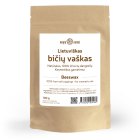
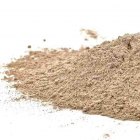
Beeswax natural unrefined

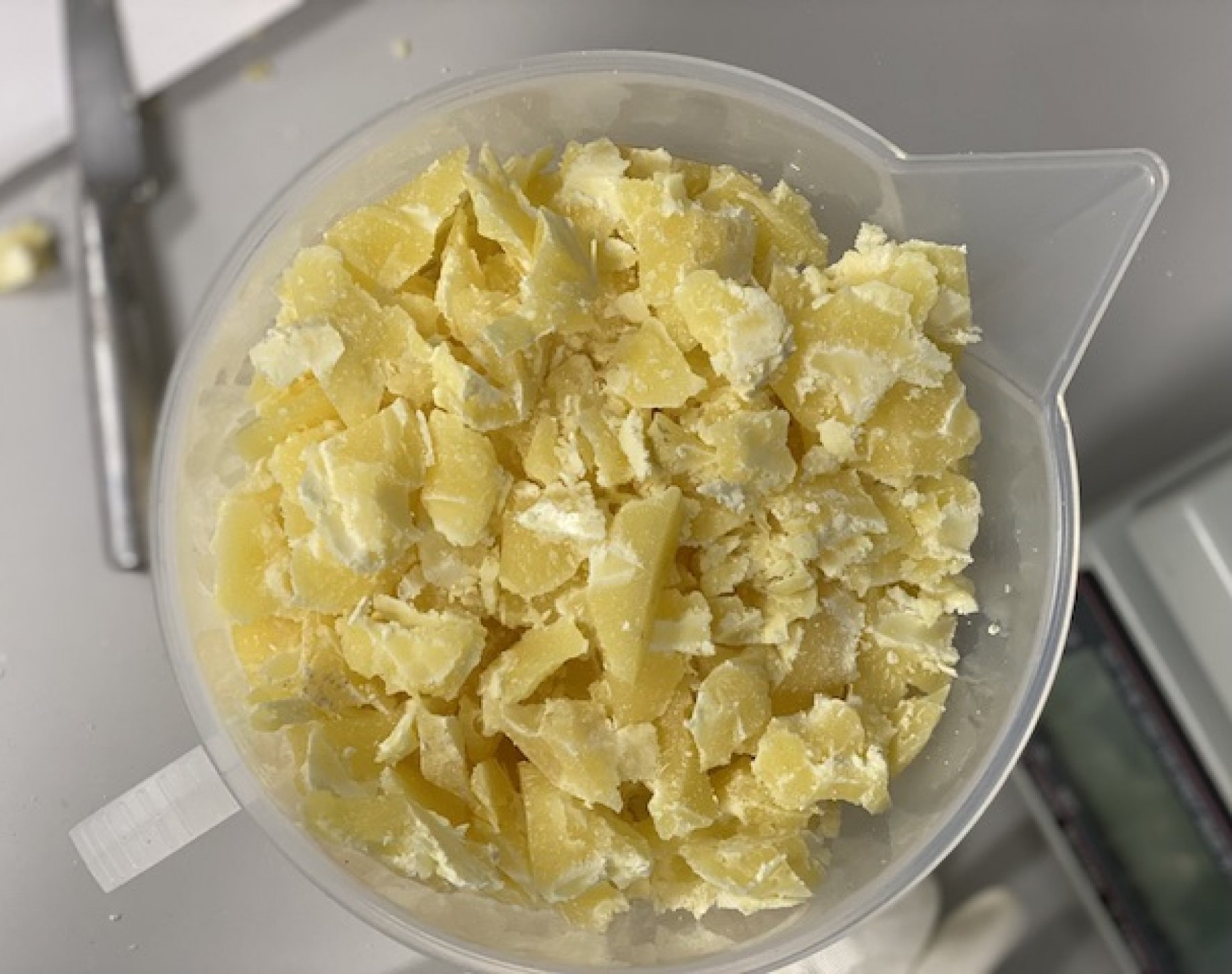

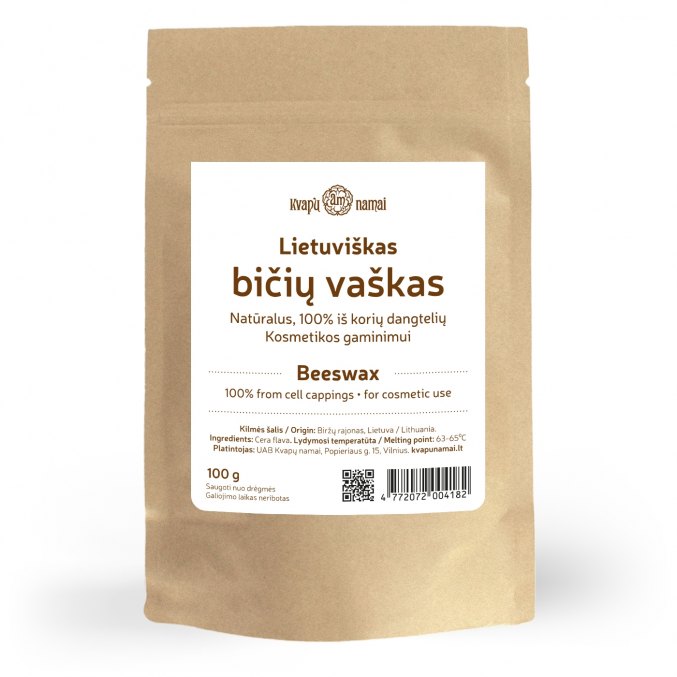
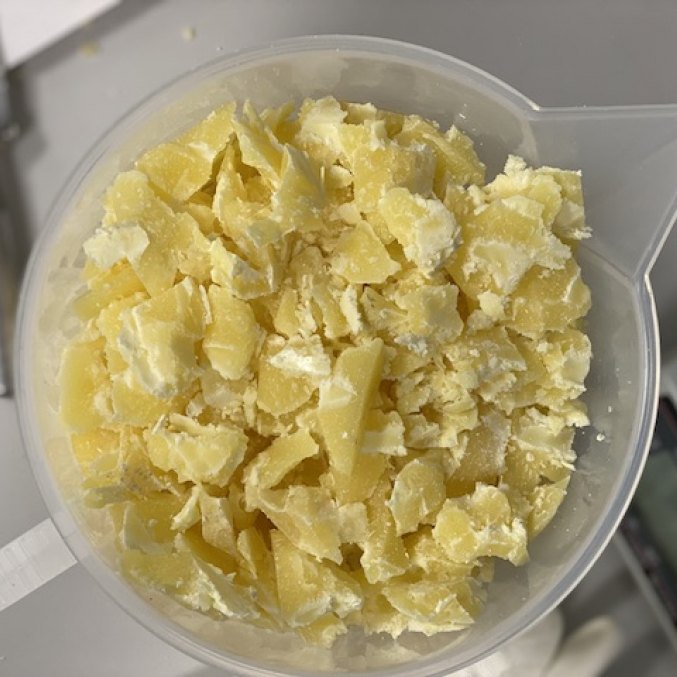
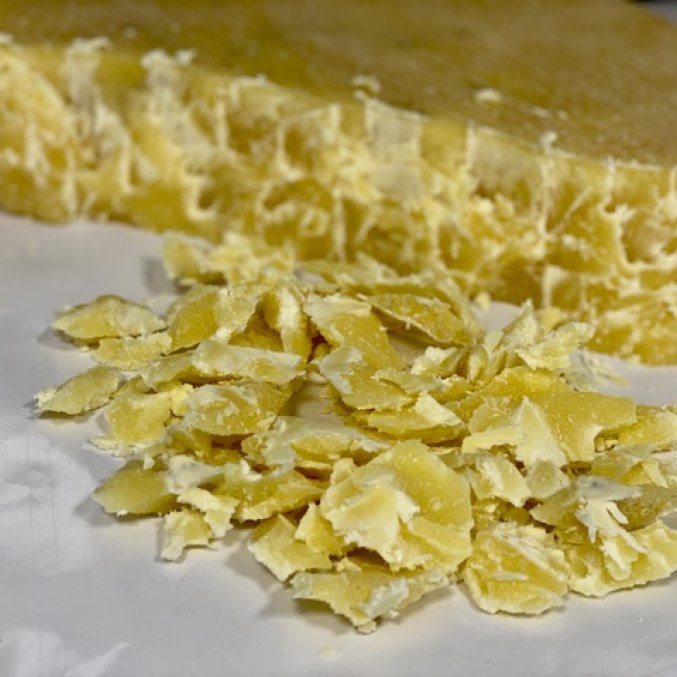
Cappings wax is not just any ordinary melted honeycomb wax, but a fresh product made by bees to seal the cells of the comb-wild bees even cover the entire comb. Fresh wax contains, in addition to pure wax, other bioactive substances beneficial for the skin—honey, pollen, propolis, vitamins, specific acids, and sterols (of course, only if the wax has not been bleached or otherwise processed). This is why genuine fresh cappings wax is an exceptionally valuable bioactive cosmetic ingredient.
Freshly produced beeswax is transparent, but over time it becomes enriched with pollen, honey, propolis, and other particles, which gives it a yellowish tint.
Beeswax does not penetrate the deeper layers of the skin, but it “impregnates” the stratum corneum of the epidermis, forming a long-lasting protective film that shields against environmental effects and helps retain moisture in the skin. Waxes naturally exit the skin along with dead keratinocytes—the corneous skin cells.
Moreover, beeswax gives ointments or creams firmness and acts as a natural emulsifier—binding fats with water. It is indispensable in lip balms and is often included in hand and face creams, balms, and various ointments.
Beeswax was one of the components of historical Galen’s (129–200 CE) “cold creams.” It combined rose water and olive oil into a smooth, cohesive product. Such creams were valued for their softness, ability to maintain skin moisture balance, and to provide a silky feel. In France, this preparation is called cérat de Galien-Galen’s wax.
The information provided is of cultural and historical significance.
- 100% natural ingredients
- Free from phthalates, free from pesticides – endocrine-disrupting substances
- Process: traditional
- Unrefined.
How to make cosmetics with beeswax
Wax is melted in a container placed in a water bath (never directly on a heat source!). According to the recipe or need, plant butters and/or oils are added. As the mixture cools, it solidifies to the consistency of a balm or ointment. Essential oils are mixed in after the product has cooled.
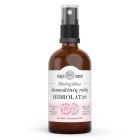
If making a cream, rose water or another hydrosol is added. Wax with oils and the hydrosol are heated separately to the same temperature, then the hydrosol is slowly incorporated into the oil. As it cools, the mixture solidifies to a cream consistency. Finally, essential oils and vitamin E are added.
Balms and creams with beeswax give the skin a feeling of smoothness and elasticity, cover it with a gentle protective film, and help maintain comfort in various weather conditions—heat, dry air, cold, or urban pollution. Such products are valued for their ability to preserve a sense of softness and moisture.
Creams and balms with beeswax can also be used as natural makeup removers—they help dissolve cosmetic residues and leave the skin feeling soft and clean. You can optionally spritz the face with hydrosol, apply the cream, leave it on for about half a minute, and wipe off with a cotton pad.
When using beeswax products, it is recommended to periodically renew the skin with gentle exfoliation to remove the old stratum corneum.
For facial exfoliation, suitable options include clay, finely ground oats or oat flour, ripe pineapple slices, or fine sugar.
For the body, coffee grounds, salt, or coconut shell powder can be used; for more delicate skin, coconut shavings or sugar are suitable.
The information provided is for educational and informational purposes.














Ratings (1)