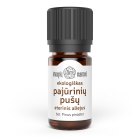
Norway Spruce Essential Oil, Picea abies Picea abies


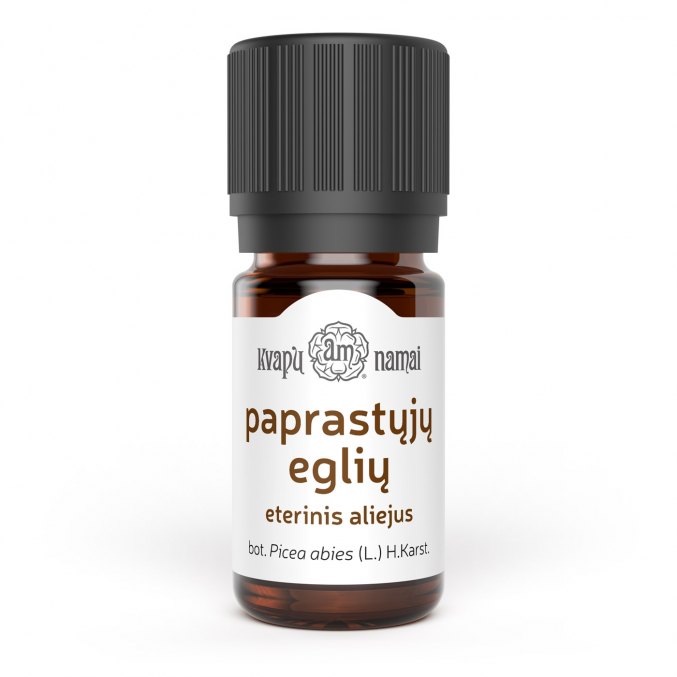
Steam distilled from branches with needles.
It provides a pleasant sensation and helps create a calm and balanced atmosphere. Its fresh aroma is particularly appreciated by those who prefer gentle scents and during the colder months.
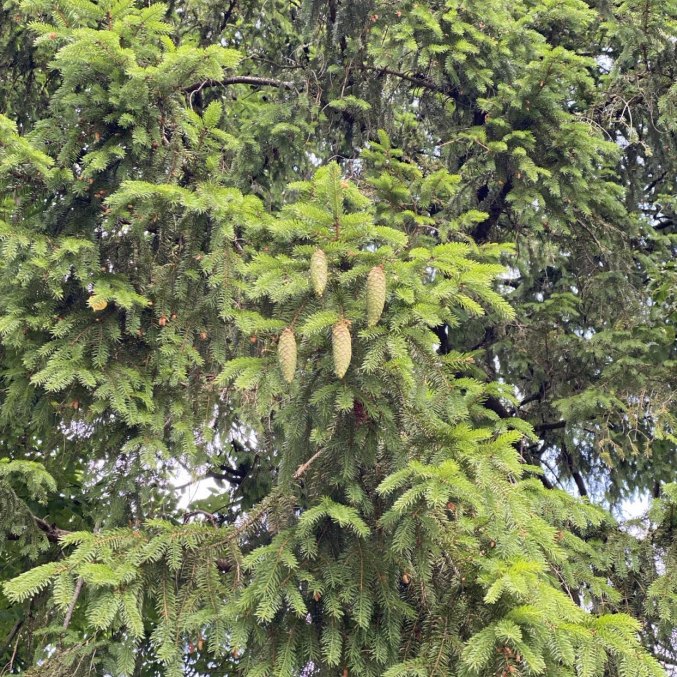
The Common Spruce is widespread throughout Europe and is also one of the most common trees in Lithuania. Our Norway Spruce Essential Oil is dominated by monoterpenes: limonene 12%, alpha-pinene 21%, beta-pinene 26%, camphene 7%, myrcene 6%, delta-3-carene 5%, and the ester bornyl acetate 4%.
The scent of spruce is dear to us because it is the Christmas tree that brings joy with festive decorations and gifts. Older people often notice that today’s spruce trees no longer smell “like they did in childhood.” Perhaps our sense of smell has become more sensitive because of the modern variety of scents? Or perhaps spruce trees are weakening because of warmer winters and retreating northwards, where winters are colder?
At KVAPŲ NAMAI, you will find a wide selection of European conifer essential oils. Forest therapy and forest bathing in your room!
Please note: these essential oils are not registered as medicinal products or biocides.
Natural plant essential oils do more than simply smell pleasant. They bring a sense of closeness to nature into our surroundings and help create a calm, harmonious, and biologically supportive atmosphere. Such an environment is especially valued by city residents who spend a great deal of time indoors and is important for children’s naturally developing emotional balance.
KVAPŲ NAMAI Quality Guarantee
KVAPŲ NAMAI is the only essential oil and aromatherapy company in the Baltic States with its own modern, specialized laboratory. Here, every batch is thoroughly tested for phthalates, pesticides, and other hazardous contaminants. You can therefore be confident in the purity, authenticity, and quality of our essential oils and hydrosols. We guarantee this not with paperwork or sweet words, but in practice—through real chemical analysis using the DC-MS method. In addition, most of our essential oils are sourced directly from experienced grower-distillers—organic producers and true masters who genuinely love their craft. As a result, our oils are not only exceptionally pure but also distinguished by outstanding aromatic quality.
- From wild plants
- Excellent aromatherapy quality - tested in the in-house lab, including GC-MS
- Free from phthalates, free from pesticides – endocrine-disrupting substances
- For children during colds season
- Air purifier & freshener
- Sauna Rituals.
- Do not apply undiluted to the skin, as it may cause irritation. Always dilute with a carrier oil before topical use.
- Oxidised (aged) oil may be more likely to irritate the skin.
- Avoid contact with the eyes.
- The effects during pregnancy and breastfeeding have not been sufficiently studied. It is generally recommended to avoid essential oils during the first three months of pregnancy and for infants under 3 months of age.
- Do not use around cats, birds, fish, rodents, or reptiles (if diffusing at home, use only small amounts or for personal use). For dogs and horses, avoid applying near the muzzle or genital area and always dilute before use.
- KVAPŲ NAMAI advises that this essential oil is not registered as a medicinal product.
- KVAPŲ NAMAI advises that this essential oil is not registered as a biocide.
- Keep tightly closed and store in a cool, dark place.
Traditional Perspective and Symbolism:
In the traditional cultures of the Baltic and Nordic countries, the Common Spruce was regarded as a symbol of life, strength, and renewal. Its branches and needles were used in bathhouse rituals, home cleansing, and seasonal ceremonies intended to restore balance and inner calm.
In Lithuanian folklore, the Common Spruce is considered a tree of strong feminine energy, associated with transitions in both directions: on one hand, it symbolises the passage to the underworld, while on the other, it welcomes new life. For this reason, spruce branches traditionally adorned both wedding and funeral ceremonies.
According to traditional beliefs, the symbolic qualities of the spruce were also linked to the direction of its branches. Upward-growing branches were seen as a sign of growth, vitality, and openness, while downward-hanging branches represented a calmer, more grounded energy. It was therefore believed that the spruce should be approached with respect and mindfulness, especially by those whose emotional state or mood tended to fluctuate.
The aroma of spruce has traditionally been associated with the freshness of the forest, renewal, and inner peace, making it a popular choice for creating a feeling of cleanliness, purification, and balance.








Ratings (0)